
What Is the Pelvic Floor- And Why It Matters More Than You Think
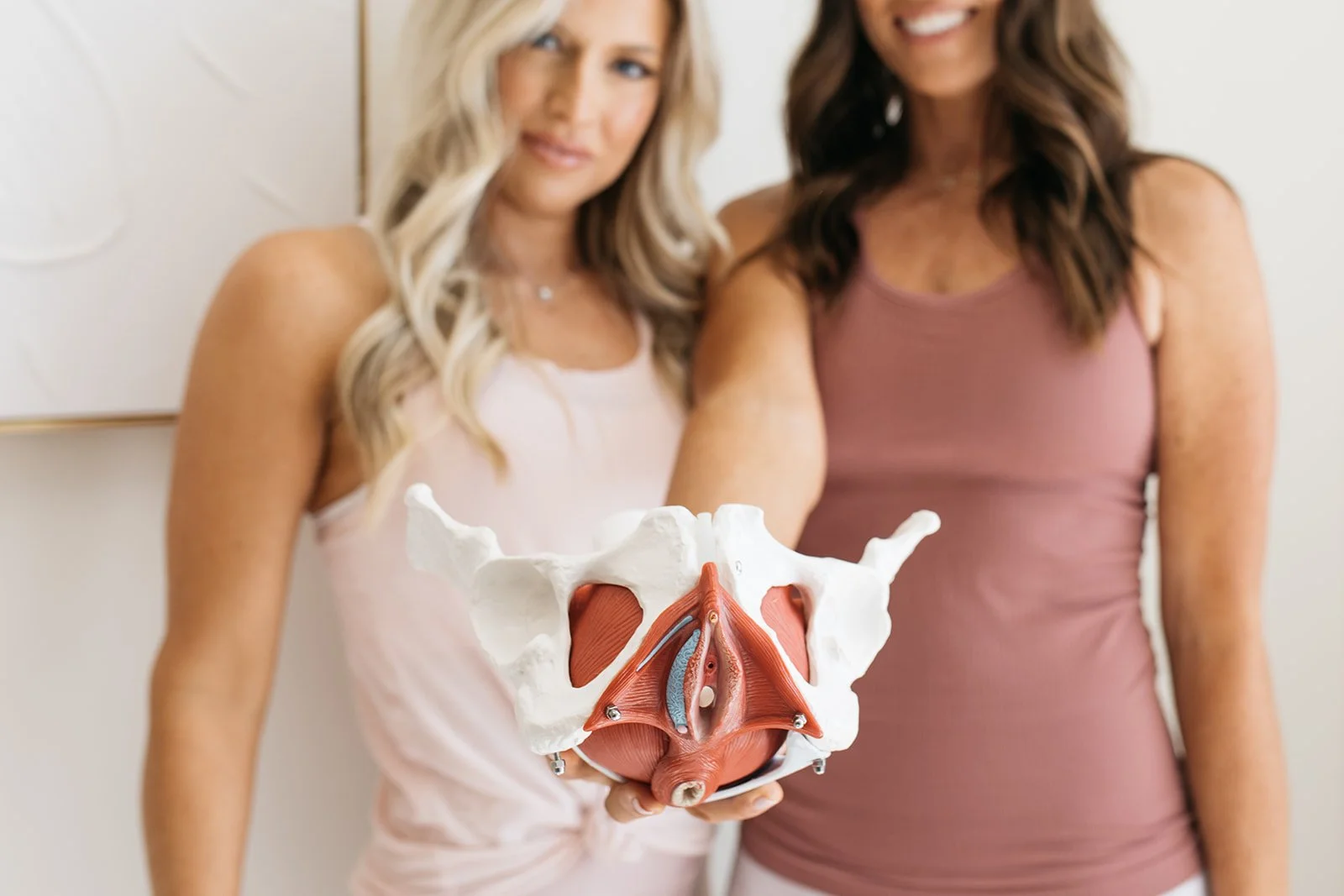
Most women don’t learn about it until something feels “off”—especially during pregnancy or postpartum—like leaking urine when you jump or run, pelvic pressure at the end of the day, constipation that won’t quit, or pain with sex or tampons.
Your pelvic floor muscles support your bladder, bowel, and uterus. They also play a major role in bladder and bowel control, core stability, and pelvic comfort.
Here’s the good news: the pelvic floor is trainable, just like any other part of your body—and pelvic floor physical therapy can help you understand what’s actually going on (instead of guessing and Googling).
What is the pelvic floor?
Your pelvic floor is a group of muscles and connective tissue that sits at the bottom of your pelvis like a supportive hammock. It helps hold up your pelvic organs—your bladder, bowels, and uterus—and it plays a major role in everyday things like peeing, pooping, core stability, and sexual function.
Most people think the pelvic floor is just about “Kegels,” but it’s much bigger than that. Your pelvic floor needs to be able to:
Contract (to support and control)
Relax (to allow peeing/pooping and comfortable sex)
Coordinate with your breathing, deep core, and hips
Believe it or not, the last two—relaxation and coordination—is where a lot of problems come from.
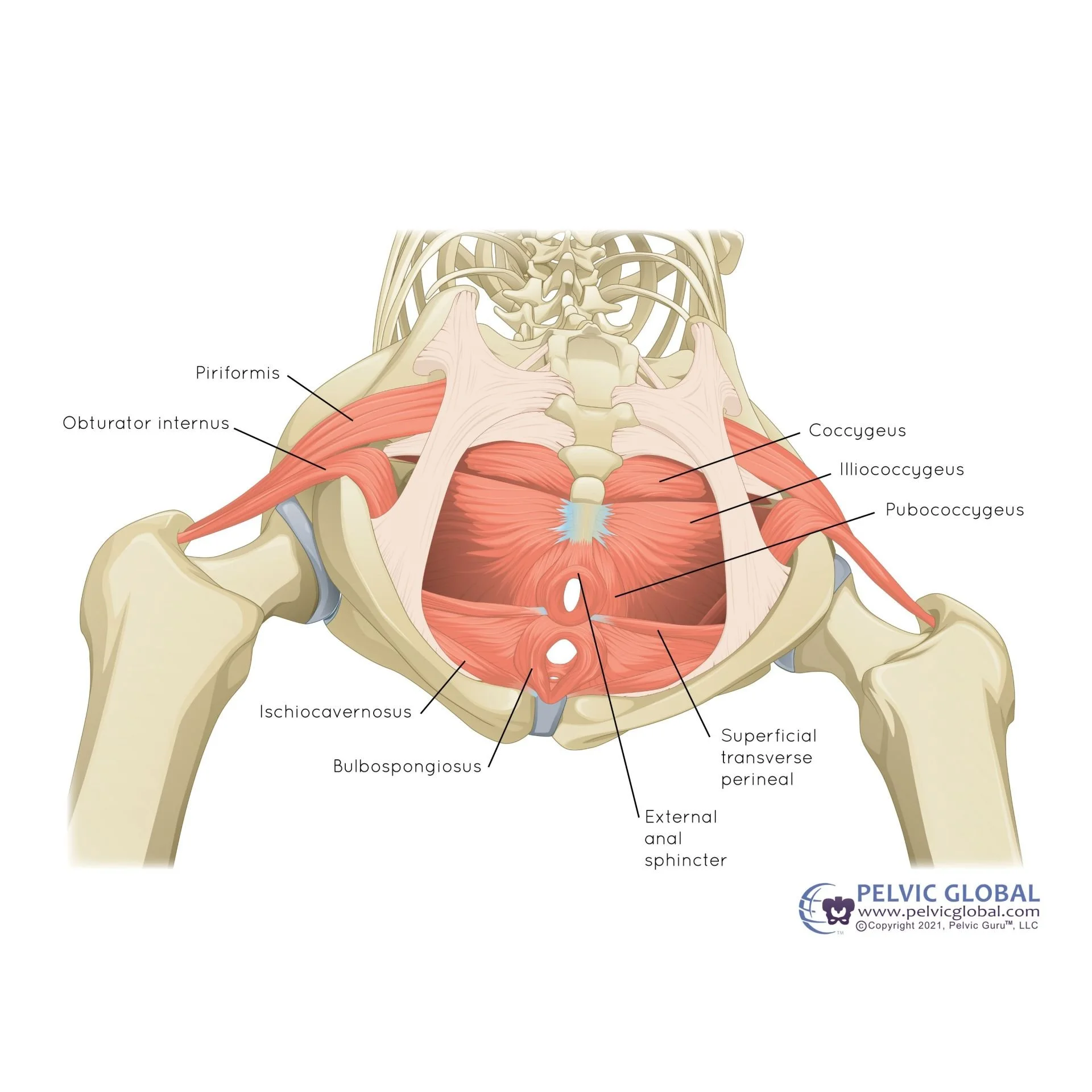
**Image used with permission from Pelvic Guru®, LLC as a Pelvic Global Member
Where is the pelvic floor located?
The pelvic floor sits inside your pelvis, spanning from the pubic bone in front to the tailbone in the back, and side-to-side across your sit bones.
It supports the openings in that area:
urethra (urine)
vagina
anus (bowel movements)
It also works closely with:
your diaphragm (breathing muscle)
your deep abdominal muscles
your back muscles
your hips/glutes
That’s why pelvic floor symptoms can sometimes show up as low back pain, hip pain, or core weakness, too.
What does the pelvic floor do?
Think of your pelvic floor as a “team player” with a few big jobs:
Supports your pelvic organs: It helps keep your bladder, bowel, and uterus supported—especially during exercise, lifting, pregnancy, and postpartum.
Helps control leaking (urine, stool, gas): When it contracts and coordinates well, it helps you stay dry and in control.
Helps you pee and poop: It has to relax to fully empty your bladder and bowels (and that’s a big deal—more on this below).
Plays a role in sexual function: It contributes to comfort, arousal, and the ability to relax with penetration.
Works with your core for stability: Your pelvic floor is part of your “core canister.” When your breathing + deep core + pelvic floor work together, you feel more stable, stronger, and often have less pressure/heaviness with movement.
10 signs your pelvic floor may need support
Pelvic floor issues are common—but common doesn’t mean you should just live with them. These symptoms are often signs of pelvic floor dysfunction.

1. Leaking urine when you cough, sneeze, laugh, run, or jump
2. Feeling like you have to pee urgently (“gotta go NOW”)
3. Peeing often (or feeling like you can’t fully empty)
4. Constipation or straining to poop
5. Feeling like you can’t fully empty your bowels
6. Pelvic pressure/heaviness (especially at the end of the day or during workouts)
7. A “bulging” sensation or feeling like something is “falling out”
8. Painful sex, pain with tampons, or pain during pelvic exams
9. Tailbone pain, pelvic pain, or pain with sitting
10. Low back/hip pain that doesn’t fully resolve—or a core that never feels “connected”
If any of these sound familiar, pelvic floor PT can help you figure out why it’s happening—and what to do about it.
Tight vs weak pelvic floor (and why “just do Kegels” isn’t always the answer)
Here’s the part most people don’t realize: pelvic floor symptoms don’t automatically mean your pelvic floor is “weak.” In pelvic floor PT we see this all the time—some pelvic floors are underactive (weaker), some are overactive (too tight), and many are a mix of both with poor coordination.
A tight/overactive pelvic floor can look like:
Painful sex, pain with tampons, or pelvic exam discomfort
Constipation/straining or trouble fully emptying
Urgency/frequency (feeling like you have to go “right now”)
Pelvic pain, tailbone pain, or feeling like you’re “clenching”
A weak/underactive pelvic floor can look like:
Leaking with coughing, sneezing, jumping, or running
Pelvic heaviness/pressure during workouts
Feeling less supported (sometimes prolapse symptoms)
The tricky part? Both can cause leaking, pressure, and urgency. That’s why guessing (or doing random Kegels) can backfire. And why seeing a pelvic floor physical therapist is so helpful.
➡️ Next month’s post: How to tell if your pelvic floor is tight or weak + when Kegels help (and when they hurt).
How pelvic floor physical therapy helps
Pelvic floor PT is not “one-size-fits-all.” We assess what your pelvic floor needs—strength, relaxation, or coordination—and create a plan that fits your body and goals. Depending on what’s going on, pelvic floor PT can help you:
Reduce leaking and urgency
Improve constipation and bowel emptying mechanics
Decrease pelvic pain or pain with sex
Manage pelvic pressure/prolapse symptoms
Rebuild deep core + breathing coordination for lifting, running, and everyday life
FAQS
-
Not automatically. Kegels can help if your pelvic floor needs strengthening—but if you’re tight/overactive, they can worsen symptoms. The best first step is figuring out what your pelvic floor actually needs.
-
It’s common, especially early postpartum, but it’s not something you have to accept long-term. Pelvic floor PT can help with leaking and getting back to exercise confidently.
-
Yes. Your pelvic floor works with your hips, deep core, and breathing. If the system isn’t coordinating well, symptoms can show up as low back, hip, or tailbone pain.
-
Often, yes—especially if constipation is tied to pelvic floor tension or poor coordination. We work on mechanics, relaxation, positioning, and habits that support easier emptying.
Ready for a clear plan?
If you’re dealing with leaking, pressure/heaviness, constipation, or pain, you don’t have to keep guessing. Pelvic floor PT can help you understand what’s happening and what to do next.

Ready to get started?
Schedule your evaluation online—Atlanta, Alpharetta, or Denver

Not sure where to start?
Quick call to answer questions & recommend next steps